
A laundromat runs 300 cycles a day. Here's where that money goes.
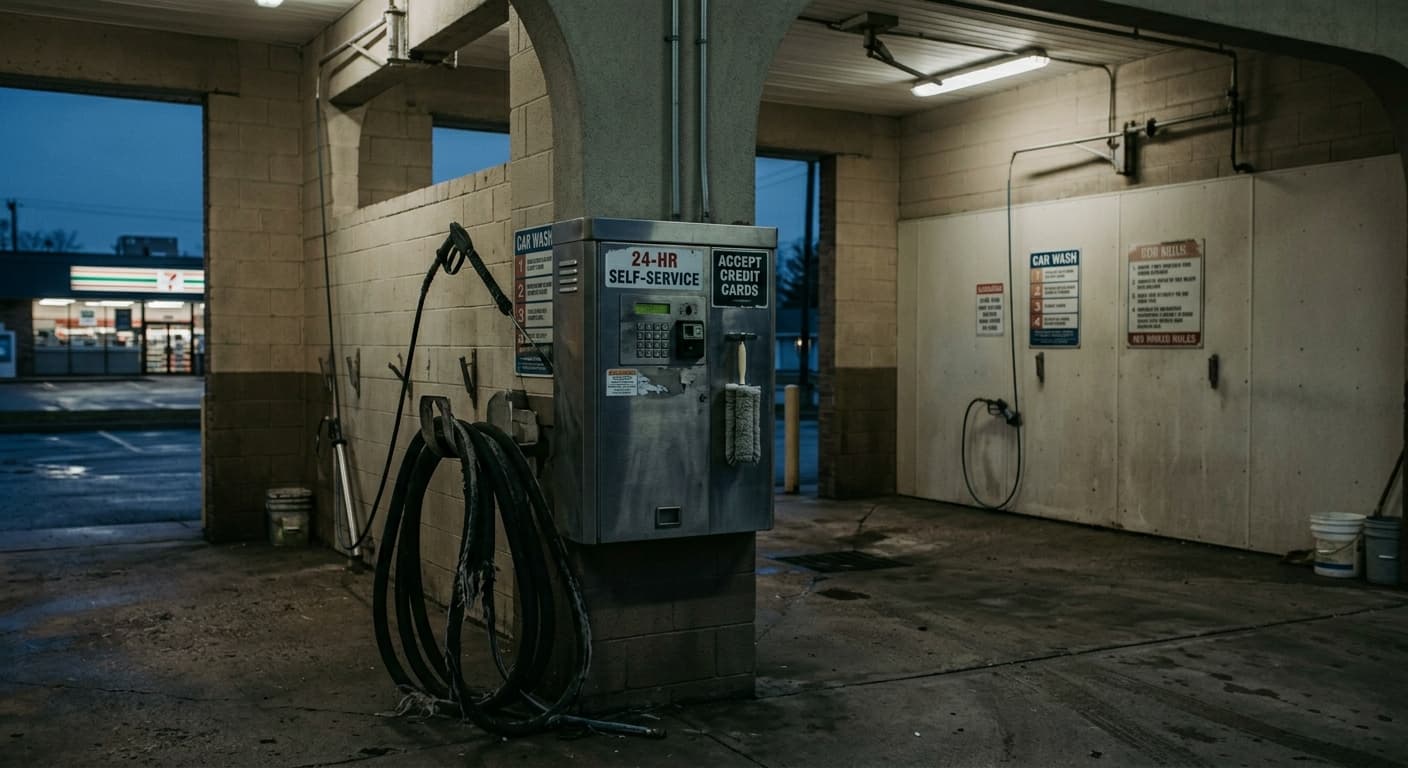
A busy laundromat runs somewhere between 200 and 400 wash cycles on an average day. Each cycle costs the customer $2.50 to $5.00. The machine doesn't negotiate, doesn't have a bad quarter, doesn't care what the Fed did last week. It runs the cycle and takes the payment, the same way it did yesterday and the day before.
That operating rhythm, repeated across hundreds of machines, is what DualMint converts into stablecoin yield.
The economics behind one laundromat
US laundromats average $150,000 in annual revenue with gross margins around 60%. After utilities, maintenance, and the operator's cut, the net margin on deployed capital runs 20–35%. That's not a token incentive or a lending spread. It's the economics of a coin-operated business that's been running the same model since the 1950s.
The yield ceiling for DualMint depositors is that operating margin. When interest rates fall, the laundromat's margin doesn't fall with them. When crypto markets correct, the number of people who need clean clothes doesn't change. The yield comes from a different economy than the one that moves most investment returns.
How a wash cycle becomes a USDC distribution
The operator collects revenue across the month — card payments, coin, contactless. DualMint's IoT sensors on the machines record cycle counts, uptime, and utilisation independently throughout that same period. At month end, the operator submits their revenue report. DualMint cross-references it against the telemetry.
A machine that ran 6,200 cycles cannot be reported as having run 62,000. The sensor data is the check. If the numbers reconcile within tolerance, the distribution releases. If they don't, the discrepancy gets investigated before any payment moves. Verified yield distributes to depositors in USDC on the first of every month.
What scores each machine
Every machine in the portfolio carries a score from 0 to 100 called the Asset Performance Index, recalculated monthly from four inputs: cash flow reliability, asset health, operator execution, and location stability. Sixty-five percent of the score comes from machine-generated data. The operator's self-reported numbers carry less weight than what the telemetry recorded.
The score determines vault eligibility and sets monitoring intensity for that machine. If a score drops below threshold, the asset gets reassigned to a backup operator. The machine keeps running. The yield source stays intact.
One machine going offline doesn't stop your distribution
DualMint's portfolio spans laundromats, HVAC units, and vertical farms across different locations. A single laundromat offline for scheduled maintenance doesn't determine whether you receive a payment — the pool absorbs it. US laundromats have a 95% five-year survival rate, against 51.5% for small businesses broadly. They ran through every recession, every rate cycle, every period where more volatile asset classes corrected sharply. The machine doesn't have a view on monetary policy.
The track record
Since May 2025, the marketplace has distributed yield every month without missing one. Twelve consecutive distributions, with zero operator defaults recorded across the full portfolio in that period.
The Boring Yield Index, which pools this operating revenue into a single institutional product, opens in Q3 2026. Pre-deposit capital earns T-bill rates through M0 until then.
The mechanism is the same whether you hold one machine in the marketplace or a pooled position in the vault. A quarter goes in. The machine runs. The revenue flows. That yield source was operating long before anyone thought to put it onchain and it runs the same way regardless of what happens to the protocols around it.